
Five Mistakes That Reduce the Efficiency of Industrial Control Systems and How to Avoid Them
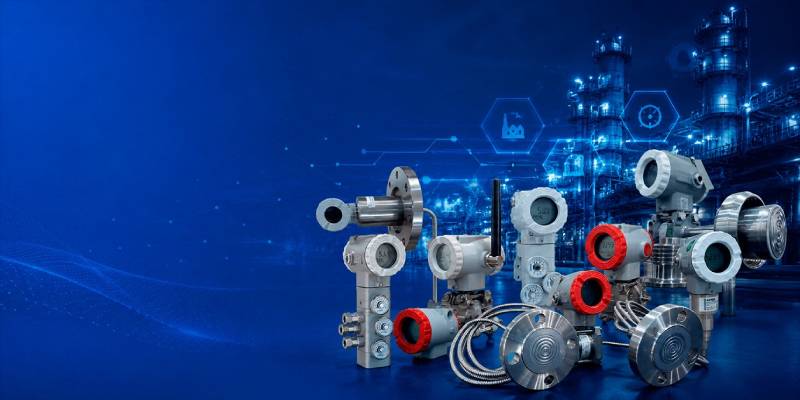
Small Instrumentation Issues Can Lead to Major Productivity Losses
Increasing productivity, improving energy efficiency, and maintaining operational stability are ongoing priorities for every industrial operation. However, many facilities continue to struggle with process fluctuations, excessive resource consumption, recurring failures, and unexpected downtime without realizing that the root cause may lie within the control system itself.
Industrial automation has evolved significantly over the past decades, incorporating smart instruments, advanced communication networks, and diagnostic capabilities that provide real-time insights into plant performance. Yet, the effectiveness of this entire ecosystem still depends on one essential factor: the proper specification, integration, and maintenance of instrumentation and control equipment.
In this article, we'll explore five common mistakes that reduce the performance of industrial control systems and explain how intelligent instrumentation solutions can help create more reliable, efficient, and safer operations.
Mistake #1: Using the Wrong Instrument for the Application
One of the most common mistakes is assuming that any transmitter or sensor can be used across different processes.
In reality, every application has unique operating conditions that directly influence equipment selection, including:
-
Process temperature
-
Operating pressure
-
Fluid type
-
Viscosity
-
Density
-
Foam formation
-
Vapor
-
Scale buildup or fouling
-
Corrosive environments
When the selected technology is not suitable for these conditions, problems quickly arise, including:
-
Unstable measurements
-
Reduced accuracy
-
Increased maintenance requirements
-
Poor process control
-
Shorter equipment lifespan
How to Avoid It
Selecting the right instrument means evaluating not only the process variable being measured but also the complete operating environment.
Instrumatic offers specialized solutions for a wide variety of industrial applications, including:
-
LD300 SERIES for accurate pressure, level, and flow measurements;
-
RD500 Guided Wave Radar Level Transmitter, ideal for applications involving foam, turbulence, or density variations;
-
DT300 SERIES for continuous liquid density measurement in industrial processes.
Choosing the appropriate technology is the first step toward achieving reliable measurements and long-term process stability.
Mistake #2: Ignoring Equipment Diagnostics
For many years, industrial instruments had a single purpose: measuring process variables.
Today's smart devices do much more.
They continuously monitor their own operating condition, providing valuable diagnostic information.
When these diagnostic capabilities are ignored, small issues can develop unnoticed until they result in:
-
Unexpected shutdowns
-
Production losses
-
Higher maintenance costs
-
Reduced process reliability
How to Avoid It
Using equipment equipped with advanced self-diagnostic capabilities makes it possible to identify failure trends before they impact production.
A great example is the FY400 SERIES Smart Valve Positioner, which provides:
-
Continuous valve diagnostics
-
Performance monitoring
-
Partial Stroke Test (PST)
-
Early detection of mechanical wear
These capabilities allow maintenance teams to schedule interventions proactively, reducing costs while increasing equipment availability.
Mistake #3: Inefficient Communication Between Devices
In today's industrial facilities, sensors, transmitters, controllers, and supervisory systems must exchange information continuously.
When communication is limited or incompatible, several problems can occur, including:
-
Delayed data updates
-
Loss of critical information
-
Integration challenges
-
Increased maintenance complexity
Poorly designed communication architectures can also make future system expansions much more difficult.
How to Avoid It
Investing in solutions that support established industrial communication protocols creates more robust, scalable automation systems.
Instrumatic offers equipment compatible with technologies including:
-
HART®
-
FOUNDATION™ Fieldbus
-
PROFIBUS DP
-
PROFIBUS PA
-
WirelessHART®
Additionally, solutions such as:
-
FI303
-
HSC303
-
HI331
-
PBI Plus
simplify communication, configuration, and integration between field devices and automation systems.
Mistake #4: Underestimating the Importance of Valve Control
Even with highly accurate measurements, a process can perform poorly if control valves fail to respond correctly to commands from the automation system.
Valve positioning errors may lead to:
-
Raw material waste
-
Increased energy consumption
-
Process instability
-
Reduced product quality
How to Avoid It
Smart valve positioners ensure the valve moves precisely to the requested position.
The FY400 SERIES and FY500 SERIES provide:
-
High positioning accuracy
-
Fast response times
-
Reduced air consumption
-
Excellent operational stability
-
Advanced diagnostics
-
Easy configuration
The result is improved process repeatability and greater overall plant performance.
Mistake #5: Viewing Automation as Simply Purchasing Equipment
Perhaps the biggest mistake is believing that automation ends once the equipment has been installed.
In reality, system performance depends on several factors, including:
-
Proper equipment specification
-
System integration
-
Correct configuration
-
Calibration
-
Startup and commissioning
-
Operator training
-
Ongoing technical support
Without these elements, even the most advanced technology may never reach its full potential.
How to Avoid It
More than simply supplying equipment, manufacturers should work with partners capable of supporting every phase of the project.
Instrumatic provides specialized support for:
-
Technology selection
-
Technical specification
-
System integration
-
Device configuration
-
Startup and commissioning
-
Functional testing
-
Technical support
This comprehensive approach helps ensure every solution delivers maximum performance from day one.
How These Mistakes Affect Industrial Performance
When these issues accumulate, they directly impact key operational performance indicators, including:
-
Increased unplanned downtime
-
Higher energy consumption
-
Material waste
-
Increased maintenance costs
-
Lower productivity
-
Reduced product quality
-
Decreased operational availability
Conversely, properly specified and integrated instrumentation delivers significant benefits, including:
-
Greater process stability
-
Data-driven decision-making
-
Lower operating costs
-
Longer equipment life
-
Increased production efficiency
-
Improved operational safety
Smart Automation: Much More Than Measurement
Modern industrial automation goes far beyond simply measuring process variables.
Today's intelligent systems connect equipment, generate diagnostics, deliver valuable operational insights, and support more efficient plant management.
Smart transmitters, valve positioners, controllers, converters, and industrial communication networks work together to transform raw data into actionable information that improves industrial competitiveness.
When implemented correctly, these technologies make industrial operations more predictable, reliable, and efficient.
Conclusion
The challenges facing modern industry require much more than durable equipment. They require intelligent solutions capable of delivering accurate measurements, reliable communications, and advanced diagnostics that support faster and more informed decision-making.
Avoiding mistakes such as improper instrument selection, ignoring diagnostics, communication limitations, poor valve control, and insufficient technical support is essential for achieving higher productivity, greater reliability, and improved operational performance.
With a complete portfolio of industrial automation, instrumentation, and process control solutions, Instrumatic helps companies across multiple industries build safer, more efficient, and future-ready operations.
Contact Instrumatic
Looking for opportunities to improve your industrial processes?
The Instrumatic team is ready to help you select the right solutions to increase efficiency, reduce operating costs, and improve the reliability of your automation systems.
Technology, precision, and expertise to drive your industry's performance.